How AI Safety Monitoring Works Onboard Transportation Fleets in Saudi Arabia
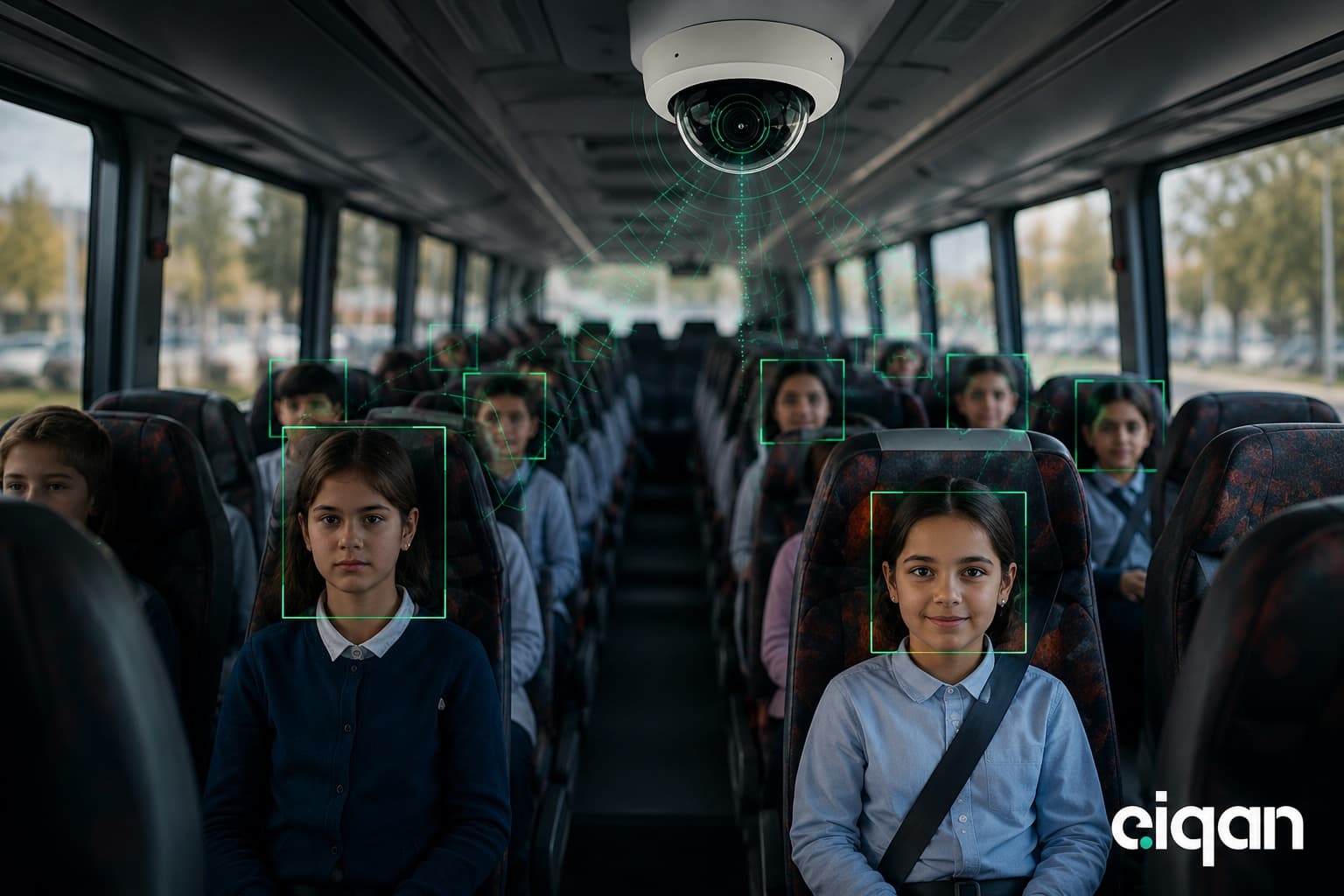
AI safety monitoring analyses onboard CCTV and audio in real time to detect risk signals: harsh braking, route deviation, and distress audio. Unlike standard cameras that only record for later review, it generates an alert the moment a risk is detected, enabling an immediate response rather than a retrospective one.
Onboard cameras have existed on buses for years, but until recently they served one purpose: recording footage for someone to review after an incident was already reported. That model is reactive by design, useful for investigations, useless for prevention.
AI safety monitoring flips the model. Onboard CCTV and audio feeds are analyzed continuously, with models trained to detect specific risk signals, unsafe driver behavior, aggressive interactions between passengers, a child left unattended, or a vehicle deviating from its expected route.
From Reactive to Proactive
How is AI safety monitoring different from a normal CCTV camera on a bus?
A normal CCTV camera only records, someone has to already know to look for footage. AI monitoring analyzes the footage continuously and generates an alert the moment it detects a risk signal, without waiting for a human reviewer or an incident report.
The shift matters because most onboard incidents are only reviewed after someone reports them, a parent complaint, a driver's own account, or a formal incident report days later. By then, the moment for prevention has already passed; all that's left is documentation.
AI monitoring changes the timeline. When the system detects a likely issue, it doesn't wait for someone to pull footage days later. It surfaces an alert to a live operations team, who can review the flagged moment and respond immediately, contacting the driver, notifying a school, or escalating to emergency services if needed.
What the System Actually Detects
AI safety monitoring isn't a single trigger, it's a set of models trained on distinct risk categories. Harsh braking and erratic driving patterns flag potential driver fatigue or distraction. Audio analysis can detect raised voices or distress calls that a camera alone might miss. Route deviation alerts catch a vehicle drifting off its expected path, whether from driver error or an unplanned detour.
None of these signals alone proves something is wrong, but together, and reviewed by a human operations team rather than acted on automatically, they turn a fleet of vehicles that were previously unmonitored between stops into one with continuous oversight.
EIQAN's fleet management platform includes AI safety monitoring across every managed vehicle, with alerts routed to a live operations team.
See how fleet management worksWhy This Matters for Every Fleet Type
School buses, corporate shuttles, and rental fleets all carry the same underlying risk: a vehicle with people in it, operating outside direct supervision for extended periods. The consequences of an unmonitored incident differ by context, but the value of catching it in minutes instead of days doesn't.
The result is a transportation service that can catch problems in minutes instead of days, without requiring a human to watch every camera feed on every vehicle at once, which was never a realistic model to begin with, even before fleets grew to their current size.
The Bottom Line
AI monitoring doesn't replace good drivers or good operations, it catches the moments neither can watch for alone. For fleets carrying people who can't always advocate for their own safety, that difference is the whole point.
The value compounds over time, too: a fleet with a year of monitored data can spot slow-building patterns, a specific route, a specific time of day, that a single incident report would never reveal on its own.
Key Takeaways
- 1AI monitoring detects issues in real time; standard CCTV only records footage for later review
- 2Detection categories include harsh driving patterns, audio events, and route deviation
- 3A live operations team reviews every alert — the AI flags, humans decide how to respond
- 4The system works on existing vehicles fitted with cameras and audio sensors
- 5Monitored data accumulates over time, revealing patterns a single incident report would never show
Frequently Asked Questions
Does AI monitoring replace human oversight entirely?
No. AI flags potential issues; a live operations team reviews and decides how to respond. The system extends what a human team can monitor, it doesn't remove the human decision-making.
Is onboard audio and video monitoring shared with parents or clients?
Footage is used internally for safety monitoring and incident review. It's not made available as a public live feed, and access is limited to the operations team responsible for safety response.
Can AI monitoring detect issues that a driver wouldn't notice themselves?
Yes, for example, patterns in braking or route deviation that build up gradually, or audio events happening behind the driver, are things a driver focused on the road might not catch in the moment.
How quickly does the operations team respond to a flagged alert?
Alerts are reviewed as they arrive, with response time depending on severity, safety-critical alerts are prioritized for immediate review rather than queued with routine monitoring.
Does AI monitoring work on both new and older vehicles?
Yes, as long as the vehicle can be fitted with the required cameras and audio sensors. AI monitoring isn't limited to newly manufactured buses.
Is there a delay between an incident and the alert being sent?
Alerts are generated within moments of detection, not batched or delayed for later review, which is what allows a live response rather than a retrospective one.
Does AI monitoring require constant internet connectivity to function?
The onboard system processes video and audio locally in real time, then syncs flagged events and footage to the operations dashboard as connectivity allows, so brief connectivity gaps don't stop detection from happening.