
How Corporate Shuttle Programs Reduce Commute Friction
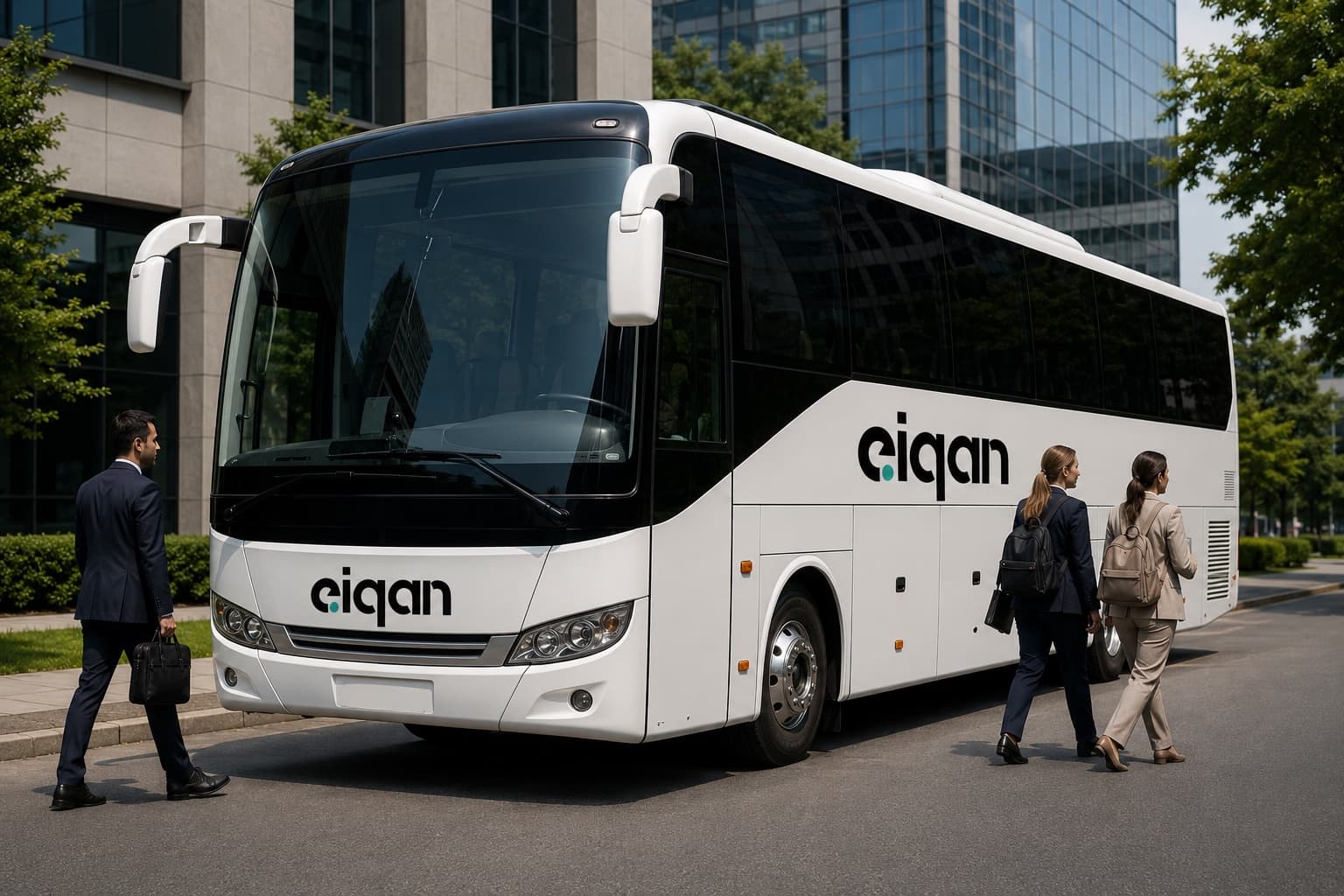
A corporate shuttle programme works when treated as active infrastructure: routes reviewed regularly, punctuality tracked, and employees able to see the live bus location. Programmes set up and left alone degrade quietly — utilisation drops and the budget line becomes hard to justify.
Commuting is consistently ranked as one of the least enjoyable parts of the workday, and unreliable transport options make it worse. A dependable shuttle program addresses this directly by removing the uncertainty of parking, traffic, and public transit connections.
The organizations that get the most value from shuttle programs treat them as an operational service, not a perk to set up and forget. That means routes are re-evaluated as headcount and office locations change, punctuality is tracked and reported on, and employees have a simple way to confirm a shuttle is coming.
Why Shuttle Programs Fail (When They Do)
What's the most common reason a corporate shuttle program stops being used?
Employees stop trusting it. Once a shuttle has been unreliable, late, inconsistent, or impossible to track, employees revert to driving themselves, and the program becomes a sunk cost nobody uses.
A shuttle program that's set up once and left alone tends to degrade quietly. Headcount shifts, a new office opens, shift patterns change, and the routes stay the same until utilization has already dropped and someone in facilities notices the empty seats.
The programs that keep working are the ones treated as living infrastructure: routes reviewed regularly, punctuality actually measured rather than assumed, and a visible, simple way for employees to know when the shuttle is arriving.
What Digital Check-In Actually Adds
Digital check-in adds another layer of value beyond convenience: HR and facilities teams get accurate ridership data instead of guessing at utilization, which makes it far easier to justify, and right-size, the program over time. A route running at 20% capacity is a candidate for consolidation; a route regularly over capacity is a signal to add a second vehicle before employees give up on it.
Without this data, both decisions get made on instinct or, more often, not made at all until someone complains loudly enough.
EIQAN's corporate shuttle service includes digital check-in and utilization reporting on every route, so your program stays right-sized as your team changes.
See how corporate shuttle worksThe Retention Angle
Done well, a shuttle program becomes a quiet retention tool, one less daily stressor for employees who'd otherwise be sitting in traffic or budgeting for parking. It's rarely the headline reason someone stays at a company, but it's consistently part of the background experience that makes a workplace easier to commit to.
Done poorly, with no visibility and unreliable timing, it becomes another source of daily frustration, worse than not offering a shuttle at all, because it sets an expectation the company then fails to meet.
The cost comparison also favors a well-run program more than most finance teams initially assume. A shuttle seat is consistently cheaper than a parking allowance or a ride-hailing stipend once utilization is factored in, and it removes a source of daily decision fatigue, no app to open, no fare to expense, no route to figure out. For employees weighing job offers, a reliable commute option is a small but real factor in the overall package, particularly in cities where traffic and parking are genuine pain points rather than minor inconveniences.
The Bottom Line
A shuttle program is infrastructure, not a launch-and-forget perk. The companies that keep investing in route accuracy and visibility are the ones whose employees actually use, and value, the program years after it started.
The reverse is just as true: a shuttle program left unmaintained doesn't fail all at once. It fades, quietly, until someone in facilities notices the seats are empty and the budget line is hard to justify.
Key Takeaways
- 1Shuttle programmes fail when treated as a one-time setup rather than live, maintained infrastructure
- 2Digital check-in gives HR accurate ridership data to right-size routes over time
- 3A shuttle seat typically costs less than a parking allowance or ride-hailing stipend
- 4Employee trust is built by live tracking and predictable timing, not just by providing a bus
- 5Route adjustments should follow ridership data, not wait for complaints to surface
Frequently Asked Questions
How do you decide where to add or remove shuttle stops?
Stop decisions are based on actual ridership data and residential clustering of employees, reviewed periodically rather than set once at launch and left unchanged.
Can employees see the shuttle's live location before it arrives?
Yes. Employees track the shuttle through an app showing live location and estimated arrival, the same visibility parents get in EIQAN's student transportation service.
What size company is a corporate shuttle program suited for?
The operational model scales from a single office with 30 employees to multi-site organizations with thousands, the routing and reporting layer adjusts to fleet size rather than requiring a minimum headcount.
How is shuttle utilization reported to management?
HR and facilities teams get regular reports on ridership and punctuality, plus real-time dashboard access, so utilization decisions are based on data rather than anecdote.
Do shuttle routes need to be fixed, or can they be flexible day to day?
Most corporate routes run on a fixed daily schedule for predictability, though route structure can be adjusted periodically as residential patterns or shift times shift.
Who typically owns the shuttle program internally. HR or facilities?
It varies by organization, but the program works best when one team is clearly accountable for it, even if both HR and facilities have a stake in its success.
Does a shuttle program work for employees with unpredictable schedules?
Yes, though it typically requires either a slightly wider pickup window or a secondary on-demand option, since fixed-route shuttles are optimized for predictable shift patterns rather than fully ad hoc travel.