
Why Digital Check-In/Check-Out Is Replacing the Paper Roll-Call
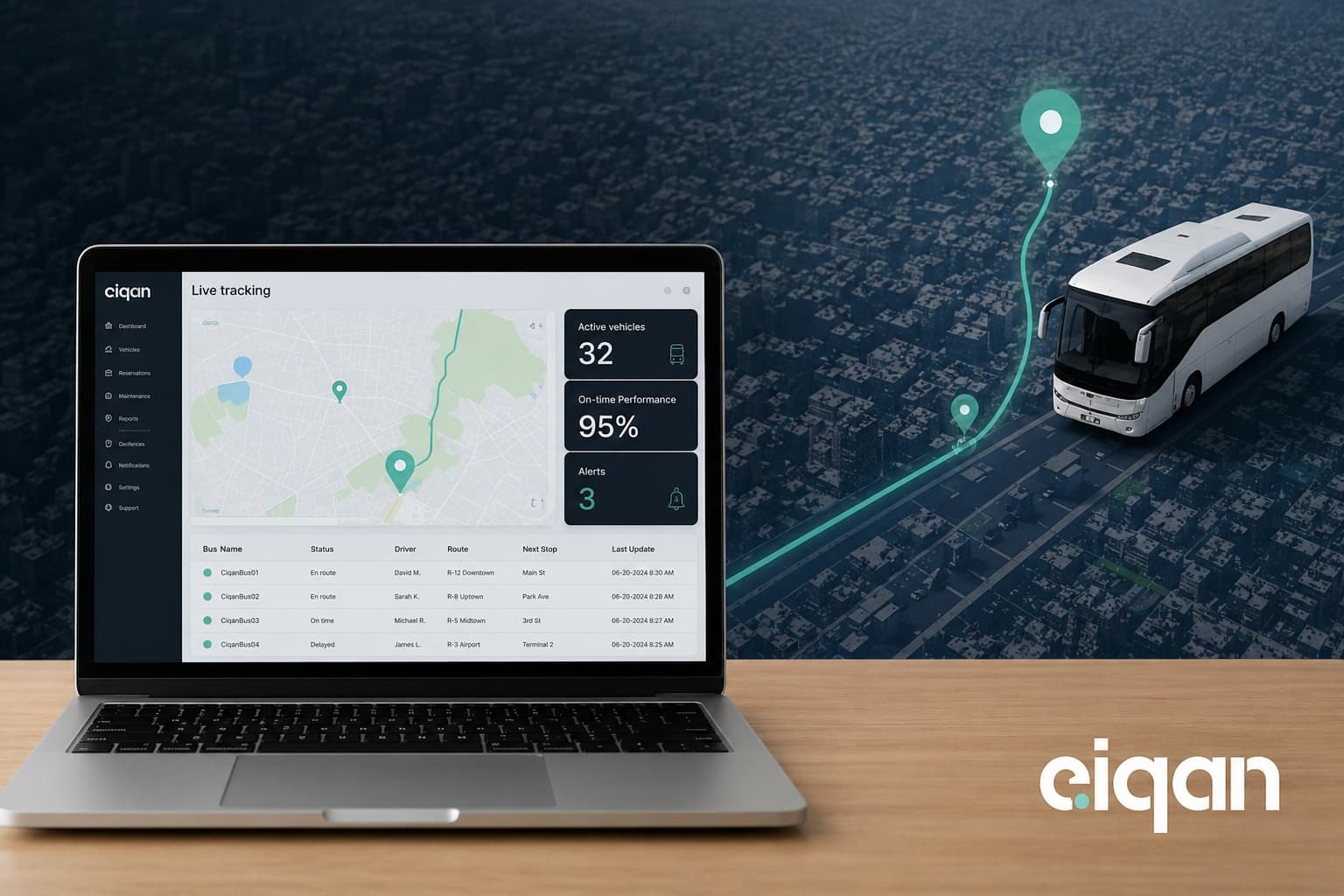
Digital check-in uses QR, NFC, or wristband scanning to log every boarding and alighting automatically. It replaces manual roll-call, which depends on one person counting correctly on every trip, and creates a timestamped, auditable record that can be checked against the expected roster without human error.
A manual roll-call depends on a driver or monitor correctly counting and recording every passenger, on every trip, without error, a standard that's difficult to maintain consistently across a large fleet.
Digital check-in removes that dependency. A QR scan, NFC tap, or wristband read logs the exact moment a student or employee boards or leaves a vehicle, creating a timestamped record that can be checked against the expected roster automatically.
Where Manual Roll-Call Actually Breaks Down
Why isn't manual roll-call reliable enough on its own?
Because it depends entirely on a single person correctly counting and recording every passenger, on every trip, without exception, a standard that's hard to sustain consistently, especially on busy routes, in bad weather, or when a driver is also focused on the road.
The failure mode isn't usually dramatic, it's a miscount on a chaotic afternoon pickup, a name skipped on a clipboard, a passenger who boarded a few stops later than expected and wasn't logged. Individually minor, these gaps are exactly the kind of thing that becomes a serious problem the one time it matters.
Because roll-call relies on human memory and handwriting under time pressure, the error rate isn't really a reflection of driver competence, it's a structural weakness in the process itself, no matter how careful any individual driver is.
What Changes With Digital Check-In
Digital check-in removes that dependency. A QR scan, NFC tap, or wristband read logs the exact moment a student or employee boards or leaves a vehicle, creating a timestamped record that can be checked against the expected roster automatically, no handwriting, no manual counting, no reliance on memory at the end of a long shift.
The immediate benefit is fewer errors: a missed boarding or an unrecorded drop-off is flagged instantly instead of discovered later, sometimes hours later, when a parent or manager asks where someone is.
EIQAN's student transportation and corporate shuttle services both include digital check-in as standard, with instant alerts for any discrepancy.
See how student transportation worksThe Data Benefit Beyond Safety
The longer-term benefit is data, attendance patterns, chronic no-shows, and route utilization all become visible without extra administrative work. A student who's consistently absent on the same day each week, or a shuttle stop nobody actually uses, becomes obvious from the data instead of requiring someone to notice it manually.
For organizations balancing safety obligations with operational efficiency, digital check-in is one of the highest-leverage upgrades available, because it turns a manual process prone to human error into an automatic, auditable one, with a record that exists whether or not anyone was watching closely that day.
Digital records also simplify incident review when something does need to be investigated. Instead of piecing together a driver's memory or a handwritten log days after the fact, an operations team can pull the exact boarding and drop-off timestamps for any student or employee on any date, cross-referenced against GPS location. That level of detail turns what used to be a slow, uncertain reconstruction into a quick, factual lookup, which matters most in the rare cases where a parent, employer, or regulator needs a precise answer, not an approximation.
The Bottom Line
A paper roll-call was never really a safety system, it was a hope that nothing would go wrong on the one trip nobody double-checked. Digital check-in replaces that hope with a record.
That record matters most in the moment it's needed: not as evidence after the fact, but as an instant flag that lets someone act before a missed boarding becomes a missed child.
Key Takeaways
- 1Manual roll-call depends on one person counting correctly under time pressure on every single trip
- 2Digital check-in logs the exact moment each passenger boards and alights, with no manual counting
- 3Missed boardings or unexpected drop-offs are flagged instantly, not discovered hours later
- 4Aggregated attendance data reveals route patterns and chronic no-shows without extra administrative work
- 5Digital records simplify incident review by providing exact timestamps rather than reconstructed driver memory
Frequently Asked Questions
What happens if a student or employee forgets their check-in card or badge?
Backup verification procedures handle exceptions like a forgotten badge, so a single missing item doesn't leave someone unaccounted for, drivers can log a manual override that's still timestamped and recorded.
Is digital check-in data kept private?
Yes. Check-in data is used for attendance and safety verification and is only accessible to authorized school, company, or operations staff, not shared publicly.
Does digital check-in work for both QR codes and physical wristbands?
Yes. EIQAN supports QR, NFC, and wristband-based check-in, so the method can match what's most practical for the age group or organization using it.
Can digital check-in data be used to spot problematic routes, not just individual passengers?
Yes. Aggregated check-in data reveals route-level patterns, consistently low usage at a stop, or recurring delays at a particular point, that individual trip records wouldn't show on their own.
Does digital check-in slow down boarding compared to informal counting?
No, a tap or scan is typically faster than a driver visually confirming passengers, so boarding times are generally unaffected or slightly improved.
Can digital check-in be added to an existing fleet without new vehicles?
Yes. Check-in hardware is installed on existing vehicles rather than requiring a fleet replacement.
Can digital check-in integrate with a school's or company's existing attendance system?
In most cases, yes, check-in data can be exported or synced to existing attendance and HR systems rather than requiring staff to manage a separate, standalone record.