
How to Choose a School Bus Transportation Service in Saudi Arabia
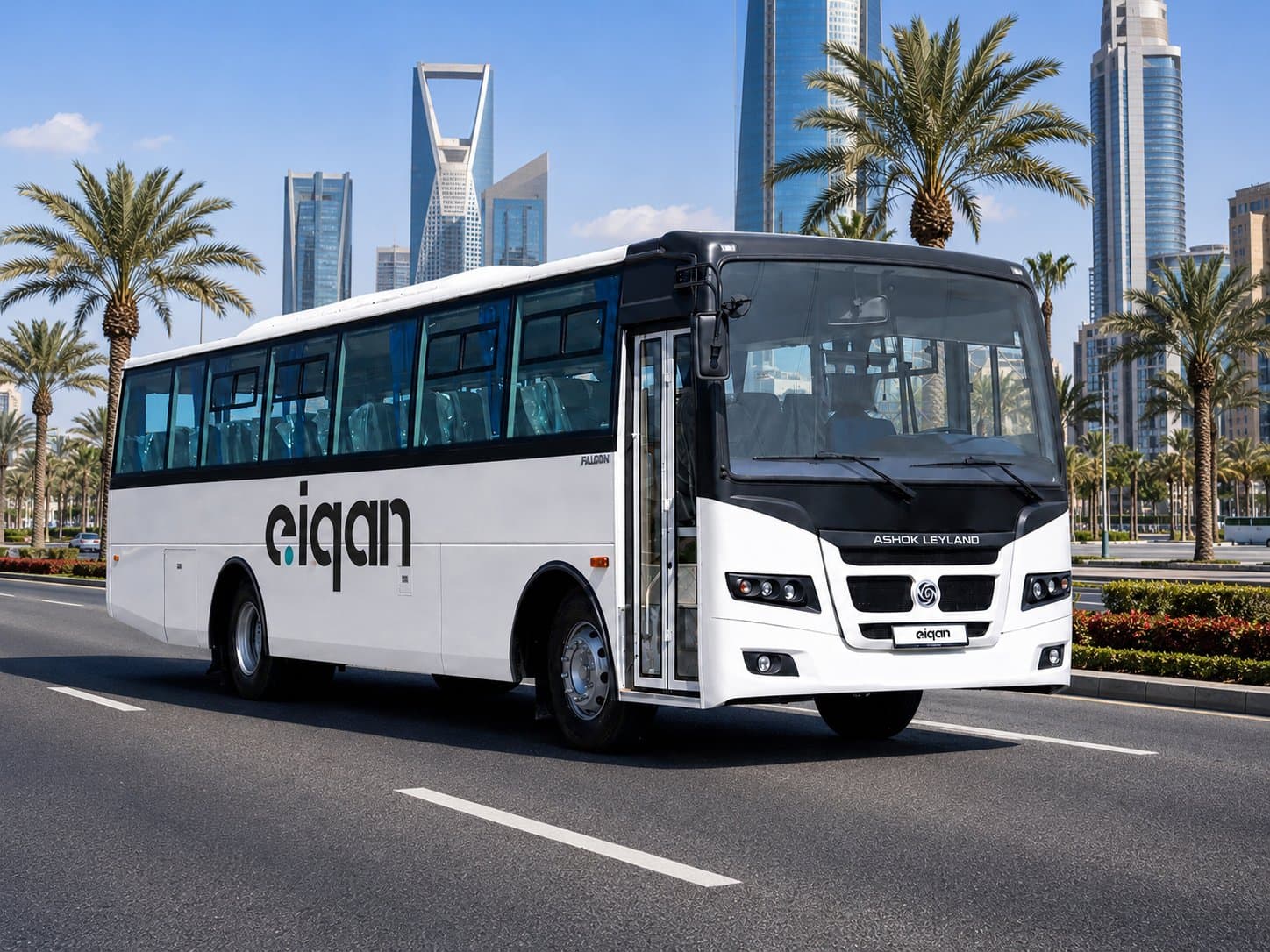
A reliable school bus service in Saudi Arabia must meet five criteria: live GPS tracking, documented driver vetting, a fleet inspection, punctuality data from existing clients, and clear contract terms. This guide covers what to verify before signing.
Choosing a school bus transportation service in Saudi Arabia is one of the most consequential decisions a school administrator will make. It is not simply a logistics contract, it is a daily commitment to the safety and reliability of hundreds of students, and a reflection of the school's standards to every parent who entrusts their child to that bus.
With the growth of private and international schools across Riyadh, Jeddah, and Dammam, demand for professional student transportation in KSA has risen sharply. So has the number of providers. Knowing what separates a trustworthy school bus service from an unreliable one, before you sign a contract, can save a school from serious operational and reputational problems.
This guide covers the five most important criteria to evaluate when selecting a school bus transportation company in Saudi Arabia, along with the questions your procurement team should ask at every stage.
1. Real-Time GPS Tracking: Non-Negotiable in 2026
What does GPS tracking mean for a school bus service in Saudi Arabia?
Real-time GPS tracking means the school and parents can see exactly where every bus is at any moment, not an estimated location, but a live position updated every few seconds. This is the single most important safety feature in modern student transportation.
GPS tracking does three things simultaneously. It deters unsafe driving behaviour, drivers aware they are being monitored maintain safer speeds and routes. It gives parents real-time certainty about where their child is, which dramatically reduces school office calls asking 'where is the bus?' And it gives the school's operations team a live view of the entire fleet, allowing immediate response if a bus is delayed or off-route.
When evaluating providers in Riyadh or Jeddah, ask for a live demonstration of the tracking dashboard. A provider without a live demo either does not have GPS on all vehicles, or the system is not reliable enough to show in real time.
EIQAN's fleet management platform provides real-time GPS tracking across all routes.
See how it works2. Driver Vetting and Training Standards
A GPS-tracked bus driven by an unvetted driver is still a risk. Driver screening is the second checkpoint that separates professional student transportation operators from budget alternatives.
Ask every provider for their driver vetting process in writing. This should include: criminal background checks aligned with Saudi regulations, a minimum years-of-experience requirement for student transport specifically (not just general driving), and documented safety training including emergency procedures and student management. Reputable school bus companies in KSA will have this documentation ready. If a provider hesitates or cannot provide it, that is a clear signal.
Also ask whether the company uses permanent drivers assigned to specific routes, or rotates drivers frequently. Route-assigned drivers build familiarity with the students, the pick-up points, and the timing, which directly reduces incidents and improves reliability.
3. Fleet Condition and Maintenance Records
The condition of the vehicles tells you more about a transportation company than any marketing material. Request a fleet inspection before signing. Walk through the vehicles yourself or send a member of your facilities team.
What to check: air conditioning (essential in Saudi Arabia's summer heat, where cabin temperatures in parked buses can exceed 50°C within minutes), seat belts for every passenger seat, first-aid kit, fire extinguisher, and emergency exit accessibility. For newer contracts, enquire about the average age of the fleet. Saudi regulations recommend commercial transport vehicles not exceed certain age thresholds.
Ask for maintenance logs or a summary of the service schedule. A professional operator will have documented preventive maintenance on record. A company that cannot produce maintenance documentation is one whose breakdowns will become your problem.
4. Route Planning and Punctuality Track Record
Efficient route planning in a city like Riyadh, where traffic conditions vary significantly by district and time of day, requires both technology and local experience. Ask the provider how routes are designed and whether they are reviewed seasonally or when new students are added.
Request punctuality data from existing school clients. A reliable school bus service in Saudi Arabia should be able to provide on-time performance rates, the percentage of trips arriving within five minutes of the scheduled time. For schools with strict start and end times, a provider with less than 95% on-time performance is a liability.
Also ask what the backup plan is when a bus has a mechanical issue mid-route. A professional student transportation company in KSA will have a contingency protocol: a replacement vehicle and communication to the school within a defined time window.
5. Contract Terms and Parent Communication Tools
Review the contract carefully before signing. The most important clauses to scrutinise are: what constitutes a service failure (and whether there are financial penalties or credits for repeated failures), the notice period required to add or remove students from routes, and which party bears responsibility for incidents during transit.
Parent communication is increasingly a differentiator for school bus services in Saudi Arabia. Some providers offer parent apps that show the live bus location, send a notification when the bus is ten minutes away, and confirm when a student boards and alights. Schools that offer this level of transparency to parents report significantly fewer complaints and higher satisfaction scores. Ask whether the provider has this capability and whether it is included in the contract or an additional cost.
Talk to EIQAN's team about student transportation solutions in Riyadh, Jeddah, and Dammam.
Get in touchChoosing the Right Partner. A Summary Checklist
- 1Live GPS tracking on every vehicle, with a demo available before contract signing
- 2Documented driver vetting process, background checks, experience minimums, safety training
- 3Fleet inspection access, air conditioning, seat belts, maintenance logs on record
- 4Punctuality data from existing school clients, target 95%+ on-time performance
- 5Clear contract terms on service failure, plus parent communication tools
A school bus service in Saudi Arabia should meet these standards as a baseline, not as a premium offering. The safety of students makes anything less unacceptable.
Frequently Asked Questions
What is the average cost of a school bus service in Saudi Arabia?
Pricing for school transportation in KSA varies by city, number of students, route distance, and fleet quality. Riyadh and Jeddah providers typically structure contracts per-student per-month or as a fleet lease for the school. Request itemised quotes from at least two to three providers before comparing, base price alone does not reflect GPS, driver training, or maintenance standards included in the contract.
Does GPS tracking on school buses comply with Saudi regulations?
Yes. GPS tracking on commercial and student transport vehicles is aligned with Saudi transport authority requirements for fleet monitoring. EIQAN's platform provides real-time tracking that meets operator compliance standards in KSA.
Can a school bus service in Saudi Arabia cover both Riyadh routes and Jeddah branches?
Yes, multi-city school groups operating across Riyadh, Jeddah, or Dammam can contract a single transportation provider with fleet capacity in all three cities. This simplifies vendor management and ensures consistent service standards across all campuses.
What should I do if a school bus is significantly late or breaks down?
Your contract should specify the provider's response protocol. A reputable school bus company in Saudi Arabia will have a backup vehicle protocol: a replacement bus dispatched within a defined window, and a direct escalation contact for the school. If this protocol is not in the contract, request it in writing before signing.
How far in advance should a school plan a transportation contract in KSA?
Ideally 2 to 3 months before the start of the academic year. Riyadh and Jeddah routes require route planning, driver assignment, and parent onboarding, all of which take time to do properly. Schools that finalise contracts late often receive suboptimal route designs or find their preferred provider already at capacity.
Does EIQAN provide student transportation in cities other than Riyadh?
EIQAN operates school bus services across Saudi Arabia including Riyadh, Jeddah, and Dammam. Contact the team at eiqan.com/contact to discuss coverage in your city and get a tailored quote.