
Jeddah School Bus and Student Transportation Services
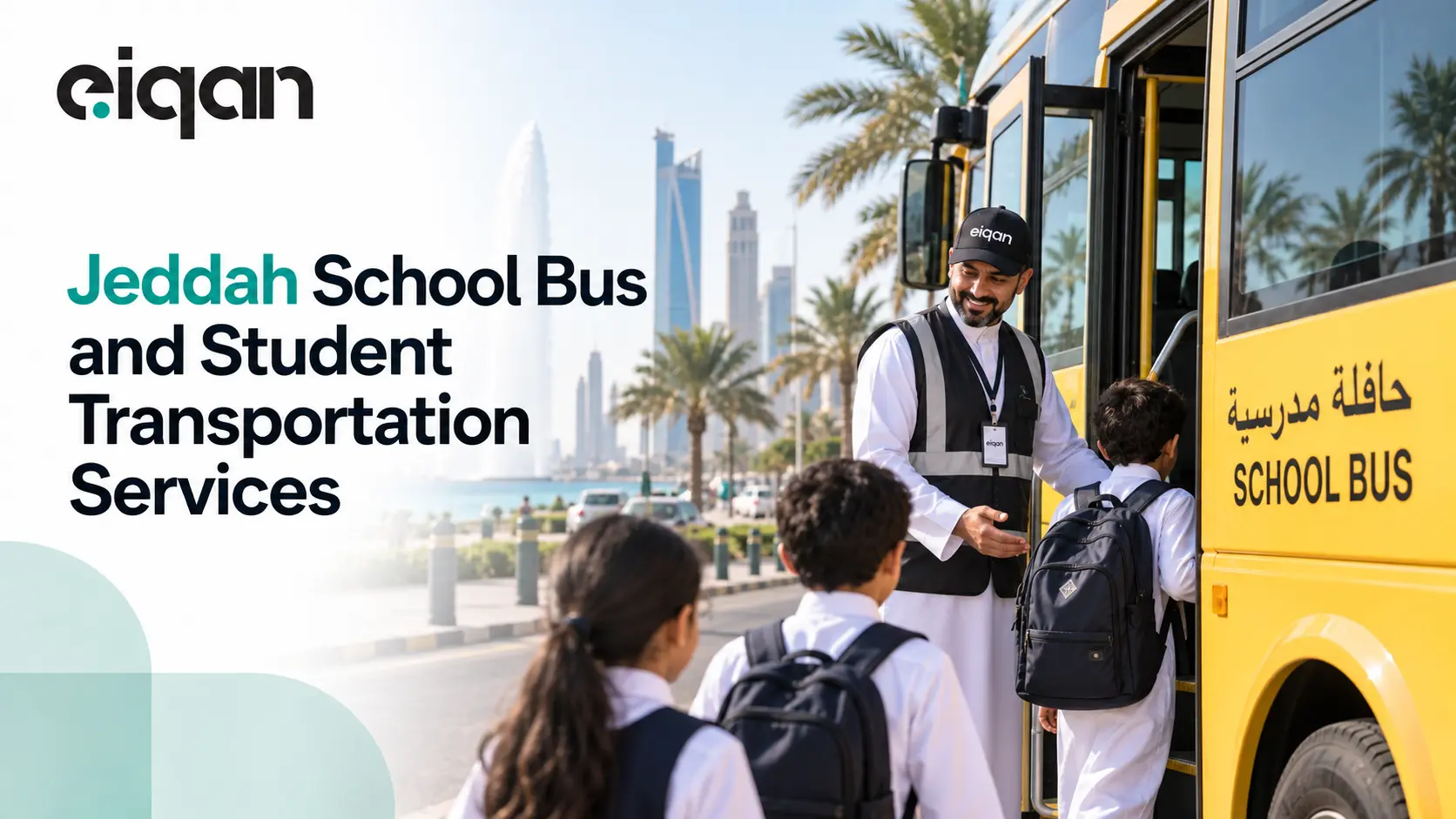
Student transportation in Jeddah operates across a city with distinct geographic challenges: coastal development along the Corniche, dense residential districts inland, and a school calendar that concentrates demand into narrow morning and afternoon windows. A provider that manages Jeddah routes needs local operational knowledge, not just a general fleet.
Jeddah is Saudi Arabia's second-largest city and its primary commercial hub on the Red Sea coast. Its school population spans international schools, government schools, and private institutions serving communities across a wide geographic range from Al Rawdah and Al Zahra in the north to Al Safa, Al Hamra, and Obhur further out. Managing student transport across this range reliably requires more than vehicles and drivers.
Schools in Jeddah that rely on a provider without active route management, GPS tracking, and documented driver standards are accepting a level of operational risk that well-managed transport removes entirely. This guide covers what student transportation in Jeddah actually requires, what distinguishes a professional provider from an informal one, and how to evaluate your options before committing to a contract.
Jeddah's School Transport Geography and Key Challenges
What are the main challenges of school bus transport in Jeddah?
Jeddah's school transport challenges centre on three factors: the city's linear coastal geography which creates long east-west routes, dense morning traffic on the key arterials connecting residential districts to school clusters, and the wide spread of school start times across different institution types which compresses vehicle availability into overlapping windows.
Jeddah stretches along the Red Sea coast for more than sixty kilometres from north to south, with residential development running east from the Corniche into inland districts. Routes from northern areas such as Al Shati and Obhur to schools in central or southern Jeddah can cover significant distances in peak-hour traffic. This geographic spread is the main reason that route planning in Jeddah requires local knowledge rather than general mapping tools.
Morning school start times in Jeddah cluster between 7:00 AM and 7:45 AM for most government and private schools, and later for some international institutions. This means school bus demand peaks sharply within a ninety-minute window. Providers running multiple routes with the same vehicle pool need precise scheduling to ensure each route completes before the vehicle is needed on the next one.
Traffic on Jeddah's main arterials, particularly King Fahd Road, Palestine Road, and the routes connecting Corniche-adjacent districts to inland school clusters, is significantly heavier during the school run than at other times of day. Route schedules that do not account for actual peak-hour travel times will produce chronic lateness that no driver performance can correct.
Key Residential Districts and Route Considerations
Northern Jeddah districts including Al Rawdah, Al Zahra, Al Shati, Obhur Al Shamaliyah, and Al Murjan represent high concentrations of school-age children attending both international and private Arabic-medium schools. Routes serving these areas typically travel south or southeast toward school clusters in Al Safa, Al Hamra, and Al Andalus.
Central and eastern Jeddah districts including Al Salamah, Al Faisaliyah, Al Bawadi, and Al Naseem serve a mix of government and private school populations. Routes in this zone tend to be shorter in distance but more complex in stop sequencing due to narrower roads and denser residential layout.
Southern Jeddah and airport-adjacent districts including Al Hamdaniyah, Al Sharafiyah, and Al Aziziyah have their own school transport demand that requires separate route consideration. A provider claiming to serve all of Jeddah should be asked specifically which districts their existing routes cover and how long average route durations are in each zone.
EIQAN operates school bus routes across Jeddah's key residential districts with GPS-tracked vehicles and active operations management.
Request a route assessment for your schoolWhat Jeddah Schools Should Look for in a Transport Provider
The baseline standard for any school bus provider in Jeddah is the same as the national regulatory requirement: heavy vehicle commercial licences for all drivers, GPS tracking on all vehicles, seat belts on every passenger seat, and a valid operating licence from the transport authority. These are not premium features. They are the minimum a school should accept before any contract is signed.
Beyond compliance, Jeddah schools should look specifically for providers with active operations management. This means a team that monitors routes in real time, not just a driver pool that runs a fixed timetable. When a route runs twenty minutes late due to traffic, an actively managed provider knows this before parents start calling and can send a notification. An unmanaged provider finds out when complaints arrive.
Parent communication is a practical requirement in Jeddah's school transport market. Parents in the city's residential communities expect to know when the bus is near their stop, when their child has boarded, and when the child has been dropped at school. Providers that offer automated SMS or app notifications for these events are operating at the standard Jeddah parents now expect.
Compliance Requirements for School Buses in Jeddah
School bus compliance requirements in Jeddah follow Saudi national transport regulations, with local traffic authority enforcement. Vehicle age limits, driver licence class requirements, mandatory safety equipment, and GPS tracking requirements all apply to any provider operating school routes in the city.
Schools in Jeddah are responsible for verifying that their transport provider meets these requirements before signing a contract. Requesting vehicle registration documents, driver licence copies, and the provider's operating licence is standard due diligence. A provider that resists producing these documents is signalling a compliance gap.
Jeddah's traffic authority conducts periodic inspections of commercial vehicles including school buses. A school whose provider fails an inspection mid-year faces operational disruption and potential questions about its own duty of care. Pre-contract compliance verification is far less costly than managing a mid-year provider failure.
EIQAN maintains full compliance documentation for all vehicles and drivers operating school routes in Jeddah, available to review before any contract is signed.
Talk to EIQAN about Jeddah school transportHow to Get Started with Student Transportation in Jeddah
The first step is mapping the residential distribution of your student body. Schools operating in Jeddah with students drawn from across the city's districts will need multiple routes. A provider that proposes a single route for a geographically dispersed student population either has not analysed your data or is not being realistic about route duration.
Request a route proposal that includes estimated pickup times for each district zone, total route duration, vehicle size and capacity, and the GPS tracking and parent notification platform the provider uses. A professional provider can produce this before a contract is signed. A provider that can only offer general assurances at the proposal stage is not ready to operate at the standard Jeddah schools require.
Plan for the first two weeks of a new transport contract to require close monitoring. New routes always need adjustment as actual travel times and student boarding patterns become clear. A provider with an active operations team will identify and correct these gaps quickly. A provider running on a set-and-forget model will leave problems to compound until they become complaints.
Key Takeaways
- 1Jeddah's linear geography and peak-hour congestion make local route knowledge essential, not a bonus
- 2Routes from northern residential districts to central school clusters require realistic peak-hour scheduling, not off-peak estimates
- 3Any provider must hold GPS tracking, heavy vehicle licences, and a valid operating licence as baseline requirements before signing
- 4Active operations management is what separates a provider that handles delays proactively from one that learns about them from parent complaints
- 5Pre-contract compliance verification protects the school from mid-year disruption if a provider fails a traffic authority inspection
Frequently Asked Questions
Which areas of Jeddah does student transportation typically serve?
Student transportation in Jeddah covers a wide range of residential districts including northern areas such as Al Rawdah, Al Zahra, Al Shati, Obhur, and Al Murjan, central districts like Al Salamah and Al Bawadi, and southern areas including Al Hamdaniyah and Al Aziziyah. Route coverage depends on where the school's student body lives, and a professional provider will design routes based on actual address data rather than fixed zones.
How long do school bus routes typically take in Jeddah?
Route duration in Jeddah varies significantly by district and time of departure. Routes from northern areas to central school locations can range from thirty to sixty minutes in peak-hour traffic. Routes within more compact residential zones may run in twenty to thirty-five minutes. Schedules should be built on observed peak-hour travel times, not distance alone.
Do school bus providers in Jeddah have to comply with national transport regulations?
Yes. Saudi national transport regulations apply in Jeddah, covering driver licence requirements, vehicle safety standards, GPS tracking, and fleet age limits. Local traffic authorities conduct inspections, and schools are responsible for verifying that their contracted provider meets all requirements before routes begin.
Can parents track the school bus in Jeddah?
With a professional managed provider, yes. GPS tracking on school buses enables real-time location sharing with parents via an app or SMS notifications for boarding and drop-off events. This is now a standard expectation in Jeddah's private and international school market, not an optional feature.
How do schools in Jeddah evaluate a new transport provider?
Schools should request a route proposal based on actual student address data, a live demonstration of the GPS tracking platform, copies of driver licences and the company's operating licence, and vehicle registration documents. A provider that cannot produce all of these before contract signing is not operating at the standard a professional school transport service requires.
Does EIQAN provide school bus services in Jeddah?
Yes. EIQAN operates GPS-tracked, fully managed student transportation in Jeddah across residential districts citywide. All routes include active operations management, parent notifications, and full compliance documentation. Schools can request a route assessment and proposal directly through the EIQAN contact page.